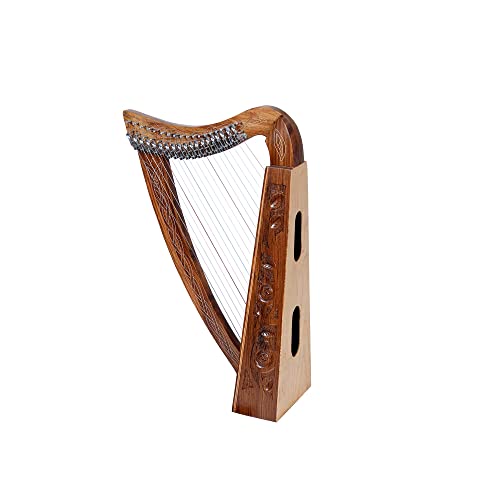
Beginner Harp Buying Guide: Finding Your First Instrument
Buying your first harp is one of the most exciting steps in your musical journey, and it’s also one of the most important purchasing decisions you’ll make as a musician. Getting it right means choosing an instrument that sounds good, stays in tune, and actually fits your body and practice space—so you’ll reach for it every day instead of letting it gather dust.
I’ve spent years helping parents, adult learners, and music teachers navigate harp purchases, and I’ve learned that “beginner” doesn’t mean “cheap” or “disposable.” It means smart: picking an instrument scaled to your hands and ears, built well enough to reward your practice, and priced fairly for its quality. This guide walks you through exactly how to do that.
Key Takeaways
- Start with harp type and size. Lever harps (22–34 strings) and smaller Celtic harps suit most beginners; larger concert grands are overkill for home practice.
- Budget realistically. Expect to spend $300–$1,500 for a solid beginner instrument; less often means poor tuning stability or cheap materials that discourage learning.
- Prioritize tone quality and tuning stability over aesthetics. A plain-looking harp that holds pitch beats a pretty one that goes flat weekly.
- Test before you buy when possible. Sound and feel vary enormously between makes; renting or trying in person saves heartbreak.
- Factor in hidden costs. Tuning tools, spare strings, a stand or case, and eventual lessons add $200–$500 to your true startup cost.
What Type of Harp Should You Choose?
The harp family is larger than many beginners realize, and picking the right type shapes everything else about your ownership experience. Let me break down the main options you’ll encounter.
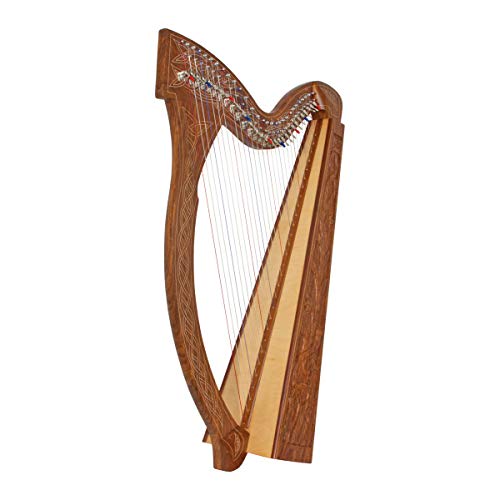
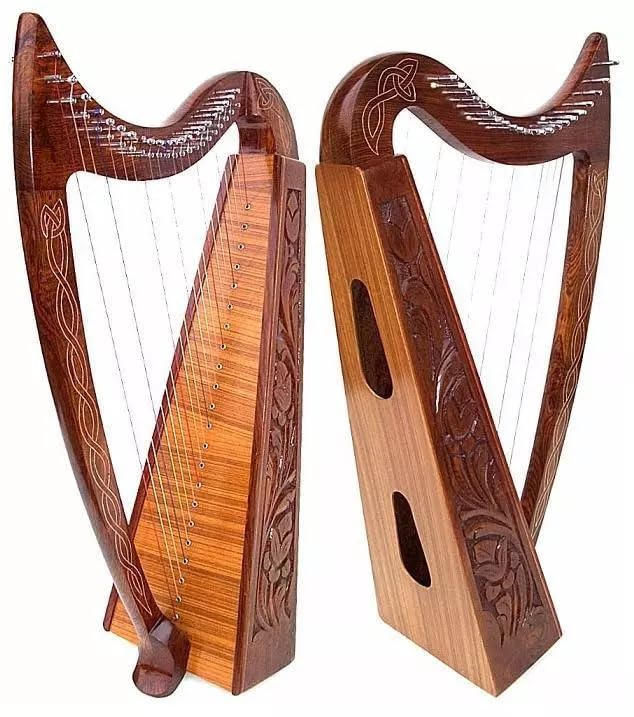
Lever harps (also called Celtic harps or folk harps) are the most common choice for beginners. They typically range from 22 to 34 strings and sit between your knees while you play. A lever—a small lever mechanism on each string—lets you raise or lower individual strings by a semitone, giving you access to all 12 musical keys without retuning manually. They’re portable, sound beautiful across many music styles (folk, classical, pop arrangements), and fit in most homes. If you’re drawn to the classic image of someone playing the harp, this is almost certainly the instrument you’re picturing.
Pedal harps are the orchestra-hall concert grands you see in symphonies and recital halls. They cost $15,000 to $50,000 (or far more for handmade instruments) and require serious floor space, climate control, and a dedicated practice room. They’re not for beginners—not because you’re not worthy, but because they’re expensive, fragile, and overkill for learning the basics. If orchestral harp is your dream, start on a lever harp and upgrade after a year or two.
Chromatic harps use a buttonlike mechanism to shift between key signatures instantly. They’re sleek and modern, but they’re also pricier than lever harps and less intuitive for beginning players. I’d pass on these unless you have a specific reason (like arranging jazz, which some chromatic harp players excel at).
Small harps—including lap harps and therapy harps with 12–20 strings—are tempting because they’re affordable and take up almost no space. But they have several drawbacks: limited note range, tuning stability issues on cheaper models, and a thin sound that can feel discouraging. They work as toys or meditation instruments, but not as learning instruments.
My recommendation for most beginners: Start with a 22- to 34-string lever harp from a reputable maker. This size range gives you enough strings to play real music, levers to access all keys, and a body that works for people ages 8 to adult (with proper posture). A 22-string is more portable; a 26–34-string gives a richer sound and easier finger positions as your hands grow stronger.
Budget and Price Points Explained
Here’s where I see many beginners stumble: they either spend too little (and end up with an instrument that discourages them) or too much (and feel guilty practicing an expensive investment). The sweet spot is much narrower than it seems.
The $100–$250 range: Student harps marketed on general retail sites often fall here. These usually have poor intonation (they go flat or sharp unpredictably), flimsy string attachments, and wood that hasn’t been properly dried. I don’t recommend these for learning, even as gifts. They teach frustration, not music.
The $300–$700 range: This is where legitimate beginner instruments live. Makers like Camac, Rees Harps, Salvi, and Lyon & Healy all offer 22–26-string lever harps in this ballpark. At this price, you get wood that holds tuning reasonably well, strings that stay attached, and a sound that’s genuinely pleasant. You’ll spend money here once and keep the instrument for years (or eventually upgrade knowing you bought well).
The $700–$1,500 range: Mid-level instruments with deeper sound, better tuning stability, and more refined construction. These are excellent if you’ve confirmed you love playing harp or if you’re shopping for a committed student. After six months to a year, many beginners trade up here or add a second, nicer harp to their home.
The $1,500+ range: Professional and semi-professional instruments. Unless you’re a music teacher buying for a studio, a parent backing a college-bound player, or an adult with serious disposable income, you don’t need to spend this much right now.
Hidden costs to budget for:
- Tuning tool (lever key, if needed for your model): $15–$40
- Spare strings (inevitable breakage): $50–$150 over time
- Case or protective bag: $50–$300
- Tuner (digital tuner or app): $10–$60
- Optional stand: $100–$250
- Lessons (if pursuing them): $15–$60 per 30-minute session
Build an extra $200–$400 into your mental budget to cover these over your first year.
How to Evaluate Sound and Build Quality
You can’t hear a harp through a screen, and I wish I could change that. Sound is everything. A harp that sounds good enough to make you smile when you play the open strings is a harp you’ll practice. One that sounds tinny or dull will sit in a corner.
When you’re comparing harps—whether online, in a shop, or from a friend—listen for these qualities:
Richness and sustain: Play an open string and let it ring. Does the sound bloom and gradually fade, or does it plop and disappear? Better harps sustain longer and project more. This correlates directly to the quality of wood, string, and construction.
Balance across the range: Play low notes, middle notes, and high notes. They shouldn’t sound dramatically different in volume or character. If the high end is shrill and the low end is muddy, you’ve hit a budget limit or design flaw.
Tuning stability: This is hardest to test if you’re buying remote, but it’s the most important practical factor. Ask the seller or a teacher: “Does this model hold pitch for a full week of daily playing?” If the answer is hedged or vague, be skeptical. High-quality woods (spruce, maple, rosewood) hold tuning better than particle board or cheap pine. Metal hardware should be thick and secure, not flimsy.
Feel and action: The strings should have gentle resistance—not too tight, not too floppy. Your fingers should glide across the strings without catching. Small details like string spacing (how far apart they are) matter when you’re learning; cramped spacing teaches bad technique.
Visual cues to quality:
- Solid wood body (not laminate or veneer on a budget).
- Strings threaded and knotted securely, not glued loosely.
- Tuning pegs that turn smoothly and hold their position.
- Levers that engage crisply without wiggling.
- Finish that’s smooth and even (not sticky or peeling).
I always recommend testing an instrument in person if possible, even if you have to drive to a harp teacher’s studio or shop. Renting first (often $30–$60 per month) is also a smart move: it lets you confirm that harp is your instrument before committing $500+.
Comparison Table: Beginner Harp Options
| Harp Type | Strings | Price Range | Best For | Pros | Cons |
|---|---|---|---|---|---|
| Lever harp (small) | 22–26 | $300–$600 | First-time players, kids | Portable, affordable, good tone | Limited note range |
| Lever harp (mid) | 27–34 | $500–$1,200 | Committed beginners, teens | Richer sound, more musical range | Takes up more space |
| Pedal harp | 46–47 | $15,000+ | Professional/orchestral only | Full chromatic range, concert quality | Extremely expensive, space, tuning complexity |
| Chromatic harp | 22–36 | $800–$2,500 | Genre-specific (jazz, contemporary) | Instant key changes, modern | Fewer players/teachers, expensive |
| Lap/therapy harp | 12–22 | $100–$400 | Meditation, therapy, play-along | Ultra-portable, low cost | Poor tuning, thin sound, limited music |
Where to Buy and Red Flags
Reputable channels:
- Specialty harp shops and makers (find local teachers for recommendations).
- Major music retailers like Thomann and Sweetwater, which vet suppliers and offer return policies.
- Rental programs through local music schools (often with purchase options).
- Direct from established makers (sometimes with custom options or educational discounts).
- Used instruments from known teachers or verified sellers (always have a teacher inspect first).
Red flags that signal a problem:
- Too-good-to-be-true pricing. If a $800 harp is suddenly $200, it’s either damaged, a scam, or a loss-leader designed to trap you into expensive lessons.
- No tuning mechanism. A harp without levers (on a lever harp) or pedals (on a pedal harp) that the seller claims you don’t need is a warning sign.
- Vague or evasive specs. “High-quality wood” or “professional-grade strings” without specifics (spruce? maple? nylon or gut?) suggests the seller doesn’t know or is hiding something.
- Reviews that mention constant retuning or broken strings. These are design or manufacturing flaws, not user error.
- No return or inspection policy. If the seller won’t let you test it or try it for 10–14 days, walk away.
- Generic “harp” listings on massive marketplaces with no brand name or maker information. These are often drop-shipped, untested instruments with no accountability.
My personal approach: I pay a small premium (10–20% more) to buy from makers or sellers I can contact directly. Knowing someone stands behind the instrument makes the experience vastly less stressful.
Harp Care Basics That Affect Longevity
A well-maintained harp lasts decades. A neglected one deteriorates in years. This isn’t complicated—just consistent.
Climate: Harps live best between 40–60% humidity and 60–75°F. Dry indoor heat in winter and damp basements both damage the wood, causing warping, cracking, and tuning issues. If your home is very dry, a small humidifier near your harp practice corner helps. If it’s damp, a dehumidifier or desiccant pack works.
Tuning: Use a digital tuner. Tune your harp at least weekly if you play daily, or before each session if you play sporadically. Regular tuning catches string wear early and trains your ear. Neglecting tuning teaches you incorrect intervals—bad for learning.
Strings: Inspect them monthly for fraying or kinks. Replace broken or damaged strings immediately (they’re $5–$15 each, not worth pushing through). Keep a spare string or two in your case.
Dust and handling: Cover your harp when not in use (a simple cotton sheet works). Never move it by the strings. Carry it upright or on a stand, always supporting the body and neck. A harp knocked over is a very expensive accident.
Storage: If you’re away for weeks, loosen the tension slightly (turn tuning pegs back a half-turn) to reduce stress on wood and strings. In longer storage, reduce humidity and check monthly.
These steps take 10 minutes a week and will keep your harp sounding beautiful and trustworthy for years.
Finding the Right Beginner Harp for Your Space and Body
Not all harps fit all situations. Let me help you narrow down.
If you have limited space (apartment, shared room): Choose a 22–26-string lever harp. These stand about 3–4 feet tall and take up roughly the footprint of an armchair. A 26-string sits comfortably in a corner or against a wall. Pedal harps and 34-string lever harps need dedicated rooms and won’t fit your life.
If you’re buying for a child (ages 6–12): Fit matters enormously. Children under 8–9 should start on harps with 16–22 strings; the string spacing is wider, and the overall size doesn’t overwhelm their reach. By age 10–12, most kids are ready for a full 22–26-string harp. Always have your child’s teacher or a qualified harp mentor assess fit before you buy. A poorly sized harp teaches bad posture and technique that’s hard to unlearn.
If you’re an adult learner or gift-giver: Start with 26 strings as a default. This gives you enough range to play most folk and simple classical pieces, a sound that’s satisfying, and a size that’s portable enough to move between rooms or take to a lesson.
If you’re left-handed: You have options, but they’re more limited. Some harps can be strung for left-handed play (ask the maker before buying). Some harp teachers will teach left-handed players using a right-handed harp, re-orienting your technique. Discuss this with a teacher before choosing an instrument.
FAQ
How long does it take to start sounding good on a harp?
Most people can pick out simple melodies within two to four weeks of casual practice. Within two to three months of regular lessons (once weekly) and daily 20–30 minute practice sessions, you’ll play recognizable songs. “Good” is subjective, but if you’re consistent, you’ll be proud of your sound within three to six months. Starting with a quality instrument speeds this timeline because tuning stability and responsiveness reward your effort.
Do I need lessons, or can I teach myself?
Lessons are highly recommended for the first few months, especially to build proper posture and hand position. Poor technique learned early is frustrating to unlearn. That said, many adult players combine weekly lessons with YouTube tutorials and self-teaching. Budget at least $200–$400 for 10–15 beginner lessons to build a solid foundation, then decide if you want to continue. A teacher also helps you choose your specific first harp, which is invaluable.
What’s the difference between nylon and gut strings?
Nylon strings (synthetic) are standard for most beginner and mid-level harps. They’re consistent, affordable ($5–$15 each), and bright-sounding. Gut strings sound warmer and richer but are more expensive ($15–$40 each), less durable, and require more climate care. Start with nylon. As you progress and develop a preference, you can experiment with gut strings on higher-end instruments.
Can I learn harp if I have no musical background?
Absolutely. Harp is actually one of the more forgiving instruments for adults with no background because you don’t need years of hand-building to get a good sound (unlike piano or violin). That said, learning to read music and understand intervals opens doors faster. Many teachers recommend a few months of beginner music theory or lessons alongside harp, but it’s not a dealbreaker if you want to pure-learn-by-ear. A good teacher will meet you where you are.
How much does a harp service or repair cost?
Minor repairs (replacing strings, adjusting tuning pegs, tightening hardware) typically cost $50–$200 if you do them yourself, or $100–$300 if a luthier does them. Major repairs (neck damage, finish restoration, structural issues) run $300–$1,500+. This is yet another reason to buy from a reputable maker: they often offer free servicing advice and reasonable rates. When budgeting your first harp, mentally reserve $200 for maintenance over three years.
Should I buy new or used?
New is safer if you’re a first-time buyer because you know the instrument’s history and usually get a warranty or return option. Used can be an excellent value if you can have it inspected by a harp teacher or luthier before purchase (inspection costs $50–$100 but saves heartache). Look for used harps from music schools, retiring teachers, or documented downsizers—not random marketplace listings with no history. Ask the seller: “Why are you selling?” A honest answer (“I upgraded,” “I don’t have time”) is good. Vague answers (“Just found it,” “Cleaning out”) might hide problems.
I hope this guide makes choosing your first harp feel less daunting. Remember: the goal isn’t to buy a perfect instrument (they don’t exist at every price point). It’s to buy a good one that will sound and feel good enough to inspire you to practice, sustain enough to hold tune between sessions, and cost fair value for its quality. Test if you can, listen to recordings, talk to teachers, and trust your instinct. You’ll know when you’ve found the right one.