
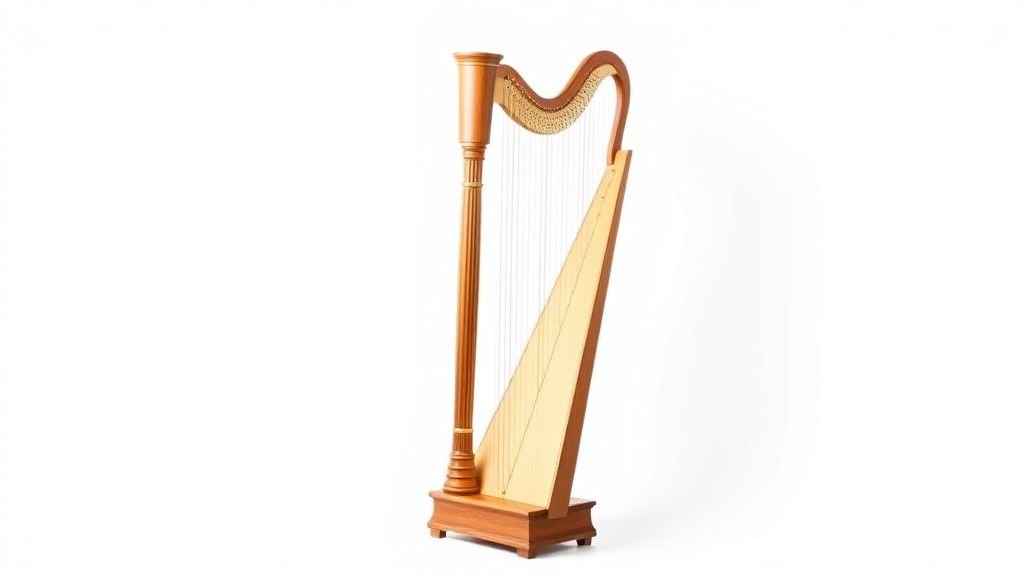
What is Harp Action?
Harp action refers to the mechanism that translates the movement of your fingers on the strings into sound. It encompasses the levers, pedals, or other mechanisms that adjust the pitch of the strings. Properly adjusted harp action ensures smooth playability, responsiveness, and consistency across the instrument. Whether you’re playing a lever harp or a pedal harp, understanding the nuances of harp action is crucial for optimizing your performance and maintaining your instrument.
Types of Harp Action
Lever Harp Action
Lever harps use semitone levers to change the pitch of individual strings. When engaged, these levers shorten the string length, raising the pitch by a half step. Lever action varies between harps, with some featuring cam-style levers and others using flip-style levers. Cam levers rotate smoothly, while flip levers snap into place. Both types require precise adjustment to ensure accurate tuning and ease of use.
Pedal Harp Action
Pedal harps rely on a complex pedal system to change the pitch of all strings in a given note class (e.g., all C strings). Each pedal has three positions: flat, natural, and sharp. When a pedal is moved, it activates a series of rods and discs inside the harp’s body, which adjust the tension of the strings. Pedal action must be finely calibrated to ensure quick, silent, and accurate pitch changes during play.
Key Components of Harp Action
Levers and Pedals
Levers and pedals are the primary interfaces between the harpist and the harp’s action mechanism. High-quality levers and pedals are designed for durability, smooth operation, and minimal noise. Look for levers made from materials like brass or stainless steel, which resist wear and corrosion. Pedals should feel sturdy and responsive, with a comfortable grip for precise foot control.
Strings and Tension
Strings play a critical role in harp action, as their tension directly affects playability and tone. Proper string tension ensures that levers and pedals can adjust pitch accurately without causing excessive stress on the harp’s structure. Strings should be evenly tensioned across the instrument, and any inconsistencies should be addressed during setup or maintenance.
Regulation and Adjustment
Regulation is the process of fine-tuning the harp’s action to ensure optimal performance. This includes adjusting lever or pedal travel, ensuring proper alignment of discs or levers, and calibrating string tension. Regular regulation is essential for maintaining playability, especially as the harp ages or undergoes environmental changes like humidity fluctuations.
Optimizing Playability
Regular Maintenance
Regular maintenance is key to keeping your harp’s action in top condition. This includes cleaning levers or pedals, lubricating moving parts, and inspecting for wear or damage. For pedal harps, professional regulation every 1-2 years is recommended to address any issues with pedal response or string alignment.
Proper String Care
Strings are integral to harp action, so proper care is essential. Replace worn or broken strings promptly, and ensure they are tuned to the correct pitch. Avoid over-tightening strings, as this can strain the harp’s structure and affect action responsiveness.
Environmental Considerations
Environmental factors like humidity and temperature can impact harp action. Excessive humidity can cause wooden components to swell, affecting lever or pedal movement, while low humidity can lead to cracking or shrinkage. Use a hygrometer to monitor humidity levels and consider using a dehumidifier or humidifier to maintain an optimal environment for your harp.
What to Look For
When evaluating harp action, consider the following:
- Smooth Operation: Levers and pedals should move easily and quietly, without sticking or requiring excessive force.
- Accuracy: Pitch changes should be precise and consistent across all strings.
- Durability: Look for high-quality materials and construction that will withstand frequent use.
- Ease of Adjustment: Choose a harp with accessible regulation points for easy maintenance.
- Comfort: Levers and pedals should be ergonomically designed for comfortable play.
By understanding harp action and its components, you can make informed decisions about your instrument’s care and maintenance. Whether you’re a beginner or an experienced harpist, optimizing playability ensures a rewarding musical experience.
Our picks worth a closer look
- Basic Harp for BeginnersCheck on Amazon → — see current price and specs.
- First Harp Book – Bety Paret | Harp Sheet Music for Beginners | Folk and ClassicCheck on Amazon → — see current price and specs.
- 50 Irish Melodies for All Harps | Harp Sheet Music Songbook for Lever and Pedal Check on Amazon → — see current price and specs.
- 76 Disney Songs for the Harp Arranged by Sylvia Woods | Harp Sheet Music SongbooCheck on Amazon → — see current price and specs.
- 22 Romantic Songs for the Harp | Intermediate Harp Sheet Music for Lever and PedCheck on Amazon → — see current price and specs.