
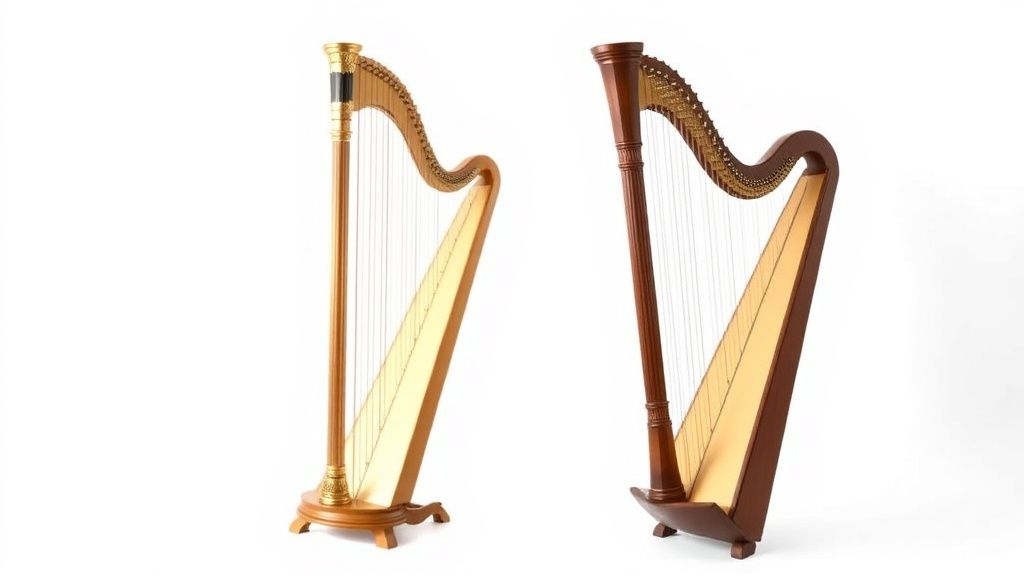
Top 5 Digital Tuners Every Harpist Needs (And Why!)
As a harpist, keeping your instrument in tune is essential for producing beautiful, harmonious sounds. Whether you’re a beginner or a seasoned professional, a reliable digital tuner is a must-have tool in your accessory kit. Unlike pianos or guitars, harps require frequent tuning due to their delicate strings and sensitivity to environmental changes. Here are the top five types of digital tuners that cater specifically to harpists, along with why they’re indispensable.
1. Clip-On Chromatic Tuners
Clip-on tuners are a favorite among harpists for their convenience and portability. These tuners attach directly to the harp’s soundboard or tuning pins and use vibrations to detect pitch. Chromatic tuners are particularly useful because they can recognize all 12 notes of the chromatic scale, making them versatile for lever harps and pedal harps alike.
Why It’s Great:
- Portability: Compact and easy to carry, perfect for gigs or lessons.
- Accuracy: Vibration-based tuning reduces interference from ambient noise.
- Ease of Use: Simple interface with clear visual feedback (e.g., LED lights or a needle display).
Best For: Harpists who need a quick, reliable tuner for on-the-go tuning.
2. Microphone-Based Tuners
Microphone-based tuners use a built-in microphone to pick up sound from the harp strings. These tuners are ideal for harpists who prefer not to attach anything to their instrument. They’re especially useful for tuning in quiet environments where external noise won’t interfere with the microphone’s sensitivity.
Why It’s Great:
- Non-Invasive: No need to clip anything onto your harp, preserving its aesthetic.
- Versatility: Can be used for other instruments like guitars or violins.
- Precision: Works well for fine-tuning individual strings.
Best For: Studio musicians or harpists who want a tuner that doesn’t physically interact with their instrument.
3. App-Based Tuners
In the age of smartphones, app-based tuners have become increasingly popular. These tuners use your phone’s microphone to detect pitch and often include additional features like metronomes, tone generators, and tuning history logs. Many apps are free or low-cost, making them an affordable option for beginners.
Why It’s Great:
- Cost-Effective: Often cheaper than standalone tuners.
- Multifunctional: Combines tuning with other practice tools.
- Customizability: Some apps allow you to adjust settings for specific harp types.
Best For: Budget-conscious harpists or those who want an all-in-one practice tool.
4. Pedal Harp-Specific Tuners
Pedal harps require precise tuning due to their complex mechanism and larger number of strings. Tuners designed specifically for pedal harps often include features like octave recognition and the ability to handle the harp’s extended range (from C1 to G7). These tuners are typically more advanced and may come with a higher price tag, but they’re worth the investment for serious pedal harpists.
Why It’s Great:
- Specialized Functionality: Tailored to the unique needs of pedal harps.
- High Accuracy: Ensures precise tuning across all octaves.
- Durability: Often built to withstand frequent use.
Best For: Professional pedal harpists or those preparing for performances or recordings.
5. Tuner-Pedal Combinations
For harpists who use amplification or effects pedals, tuner-pedal combinations are a game-changer. These devices allow you to tune your harp silently while connected to an amplifier or PA system. They’re particularly useful for live performances where tuning needs to be quick and discreet.
Why It’s Great:
- Silent Tuning: Perfect for live settings without interrupting the performance.
- Integration: Combines tuning with other pedal effects for a streamlined setup.
- Visibility: Often features a large display for easy reading on stage.
Best For: Performing harpists who use amplification or effects in their setup.
What to Look for in a Digital Tuner
When choosing a digital tuner for your harp, consider the following factors to ensure you get the best tool for your needs:
- Accuracy: Look for a tuner with high precision, especially if you play a pedal harp or perform professionally.
- Ease of Use: A clear display and intuitive interface make tuning faster and less frustrating.
- Portability: If you travel frequently, opt for a compact, lightweight tuner.
- Versatility: Chromatic tuners are ideal for lever and pedal harps, while app-based tuners offer additional practice tools.
- Durability: Invest in a tuner built to last, especially if you’ll be using it frequently.
Conclusion
A digital tuner is an essential tool for any harpist, ensuring your instrument sounds its best at all times. Whether you prefer the convenience of a clip-on tuner, the versatility of an app, or the precision of a pedal harp-specific device, there’s a tuner out there to meet your needs. By understanding the features and benefits of each type, you can make an informed decision and keep your harp perfectly tuned for every performance, practice session, or recording. Happy tuning!
Our picks worth a closer look
- Roosebeck Harp String Set, 19, F - CCheck on Amazon → — see current price and specs.
- Roosebeck Harp 26-String Set F - CCheck on Amazon → — see current price and specs.
- Ranch Guitar Tuner Clip On - Fast & Accurate Chromatic Acoustic/Electric Guitar Check on Amazon → — see current price and specs.
- EASTROCK Adjustable Piano Bench, X Frame Folding Keyboard Chair Stool with 3 HeiCheck on Amazon → — see current price and specs.
- Guitar Tuner Clip On 1 Pack Tuners for Acoustic Electric Guitar Bass Ukulele VioCheck on Amazon → — see current price and specs.