
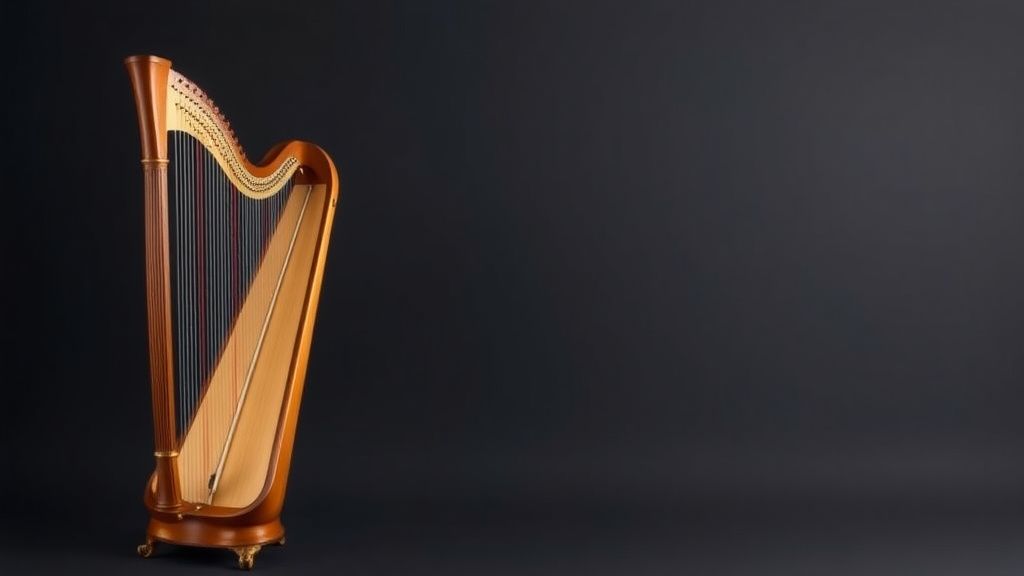
Lever Harp vs. Pedal Harp: Key Differences
The harp world is broadly divided into two main categories: lever harps (also called Celtic or folk harps) and pedal harps (or concert harps). Understanding their differences is crucial for choosing the right instrument for your needs.
Lever Harps
- Mechanism: Uses levers (often made of brass or carbon fiber) to raise individual strings by a semitone.
- Range: Typically 22 to 38 strings, though some extend to 40+.
- Portability: Lightweight (15–30 lbs for smaller models), making them ideal for travel or casual play.
- Tuning: Usually tuned diatonically (like the white keys on a piano), with levers enabling key changes.
- Cost: Generally more affordable than pedal harps, though high-end lever harps can still be a significant investment.
Pedal Harps
- Mechanism: Uses seven pedals (one per note in the diatonic scale) to change the pitch of all corresponding strings simultaneously.
- Range: 40–47 strings, offering a full chromatic range without manual lever adjustments.
- Portability: Heavy (75–90 lbs) and bulky, requiring a wheeled cart for transport.
- Tuning: Chromatic by default, allowing seamless key changes mid-performance.
- Cost: Considerably more expensive due to complex mechanics and materials.
Who Should Choose a Lever Harp?
Beginners
Lever harps are ideal for new players due to their simplicity, affordability, and manageable size. A 34-string lever harp is a popular starting point, offering enough range for folk, classical, and therapeutic music.
Folk & Traditional Musicians
If you play Celtic, Paraguayan, or other folk traditions, lever harps are historically authentic and often preferred for their warm, intimate tone.
Traveling Musicians
Smaller lever harps (e.g., 26–29 strings) fit easily in cars and can be carried with a padded gig bag. Look for models with detachable legs for added convenience.
Budget-Conscious Buyers
While high-end lever harps exist, many well-built student models are available at lower price points.
Who Should Choose a Pedal Harp?
Classical & Professional Players
Pedal harps are standard in orchestras and advanced repertoire. If you aim to play impressionist works (e.g., Debussy) or orchestral parts, a pedal harp is necessary.
Chromatic Music Lovers
If you frequently play in multiple keys or need rapid modulation (e.g., jazz, contemporary classical), pedals provide unmatched flexibility.
Long-Term Commitment
Pedal harps are a lifelong investment. If you’re serious about advancing technically, renting or purchasing a used pedal harp early may be wise.
Key Features to Compare
String Material
- Lever harps: Often use nylon, gut, or fluorocarbon strings. Nylon is durable and bright; gut offers warmth but requires humidity control.
- Pedal harps: Use gut (for warmth) or wire-wound bass strings (for projection). Some modern models use synthetic gut for stability.
Soundboard & Construction
- Lever harps: Lighter soundboards (e.g., laminated birch) suit softer tones; solid spruce or cedar enhances resonance.
- Pedal harps: Hardwood frames (mahogany, maple) and spruce soundboards maximize volume and sustain.
Lever/Pedal Quality
- Lever harps: Check for smooth, quiet levers (e.g., Camac’s “Lovely Levers” or carbon-fiber options). Avoid stiff or noisy mechanisms.
- Pedal harps: Test pedal responsiveness—good models offer precise, fluid action with minimal effort.
Accessory Considerations
For Lever Harps
- Tuners: Clip-on chromatic tuners work well for frequent lever changes.
- Humidifiers: Essential for gut-stringed harps in dry climates.
- Stands: Adjustable stands improve ergonomics; some double as travel cases.
For Pedal Harps
- Carts: Heavy-duty wheeled carts are a must for transport.
- Benches: Height-adjustable benches with back support help during long rehearsals.
- Dampers: Practice-room dampers (e.g., foam mutes) reduce volume for apartment playing.
What to Look for When Buying
Lever Harps
- String tension: Light tension is easier on beginners’ fingers.
- Lever placement: Ensure levers are within easy reach and don’t buzz.
- Weight: If portability matters, opt for carbon-fiber or smaller models.
Pedal Harps
- Pedal smoothness: Test each pedal for consistent, quiet operation.
- String spacing: Wider spacing suits larger hands.
- Soundcheck: Play in a hall if possible—some harps project better than others.
General Tips
- Try before you buy: Visit showrooms or harp festivals.
- Rent first: Many shops offer rent-to-own programs for pedal harps.
- Check reviews: Look for feedback on durability (e.g., neck stability, wood aging).
Final Thoughts
Your choice depends on goals, budget, and lifestyle. Lever harps offer accessibility and charm, while pedal harps unlock professional opportunities. Whichever you choose, invest in proper maintenance—humidity control, regular tuning, and quality accessories will keep your harp sounding beautiful for years.
Our picks worth a closer look
- 50 Irish Melodies for All Harps | Harp Sheet Music Songbook for Lever and Pedal Check on Amazon → — see current price and specs.
- 76 Disney Songs for the Harp Arranged by Sylvia Woods | Harp Sheet Music SongbooCheck on Amazon → — see current price and specs.
- 22 Romantic Songs for the Harp | Intermediate Harp Sheet Music for Lever and PedCheck on Amazon → — see current price and specs.
- Groovy Songs of the ’60s for Harp Arranged by Sylvia Woods | 40 Easy and IntermeCheck on Amazon → — see current price and specs.
- Stairway to Heaven | Harp Sheet Music Arrangement for Lever and Pedal Harp | SylCheck on Amazon → — see current price and specs.