
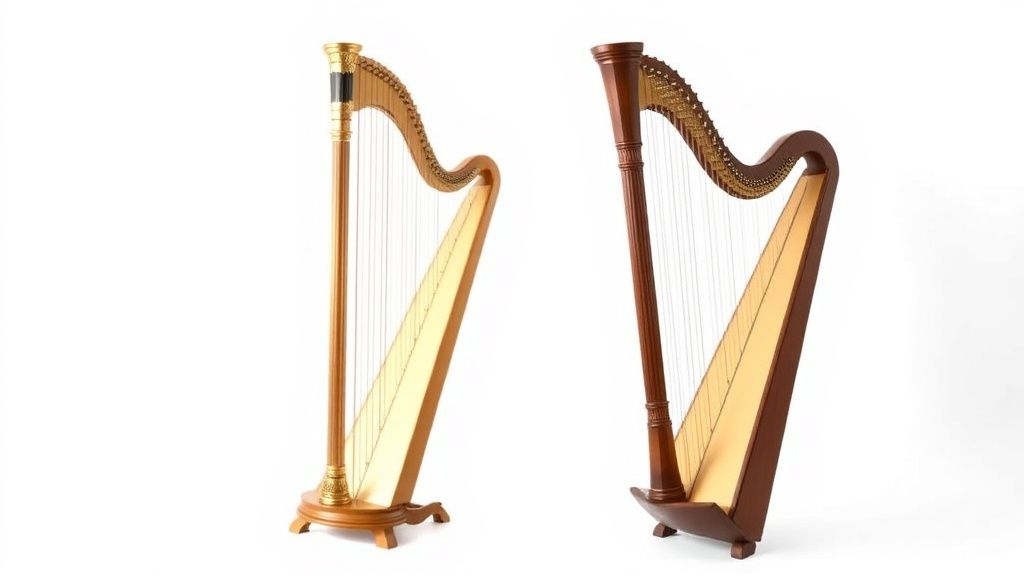
Harp Re-stringing Kits: Everything You Need
Re-stringing a harp is an essential skill for any harpist, whether you’re a beginner or a seasoned professional. Over time, strings wear out, lose their tone, or break, and having the right tools on hand ensures your instrument stays in top condition. A harp re-stringing kit simplifies the process by providing all the necessary components in one convenient package.
Why You Need a Harp Re-stringing Kit
Harp strings are under constant tension, which means they naturally degrade over time. Regular maintenance, including re-stringing, helps preserve sound quality and playability. A dedicated re-stringing kit offers several advantages:
- Convenience: All essential tools are included, saving time and effort.
- Compatibility: Kits are often designed for specific harp types (lever harps, pedal harps, etc.), ensuring the right fit.
- Protection: Proper tools minimize the risk of damaging the harp during string replacement.
Components of a Harp Re-stringing Kit
A well-equipped kit typically includes the following items:
1. Strings
Harp strings are made from various materials, each affecting tone and durability:
- Nylon: Common for lever harps, bright and warm sound.
- Gut: Traditional material, rich and resonant but sensitive to humidity.
- Wire (bass strings): Steel or copper-wound for deeper notes.
Kits may include full sets (all strings) or partial sets (e.g., only bass or treble strings).
2. String Hook or Lifter
A small, sturdy tool used to lift strings off tuning pins without damaging the wood or neighboring strings.
3. Tuning Key or Wrench
Fits the tuning pins to adjust string tension. Some kits include a double-ended key for different pin sizes.
4. String Cutter
Sharp, precision scissors or wire cutters for trimming excess string length after installation.
5. Bridge Pins (if applicable)
Some kits include replacement bridge pins for harps that use them to anchor strings.
6. String Gauge or Measuring Tool
Helps verify string thickness and length, ensuring proper fit and tension.
7. Cleaning Cloth
Soft microfiber or lint-free cloth for wiping down the harp during maintenance.
Types of Harp Re-stringing Kits
Lever Harp Kits
Designed for folk or Celtic harps, these kits focus on nylon or gut strings and often include a lever adjustment tool.
Pedal Harp Kits
More complex, catering to concert harps with wire-wound bass strings and additional tools for pedal mechanism maintenance.
Bass String Kits
Specialized sets for replacing only the thicker, wire-wound bass strings, which wear out faster.
Treble String Kits
Focus on higher-register strings, usually nylon or gut, for quick replacements without buying a full set.
What to Look for in a Harp Re-stringing Kit
When selecting a kit, consider the following:
-
Harp Compatibility
- Ensure the strings and tools match your harp’s make, model, and string count.
- Check if the kit is for lever, pedal, or cross-strung harps.
-
String Material
- Nylon is durable and affordable; gut offers superior tone but requires more care.
- Wire-wound strings should be corrosion-resistant.
-
Tool Quality
- Look for rust-resistant metal tools (e.g., tuning keys) and ergonomic handles.
- Avoid flimsy string hooks that could bend or scratch the harp.
-
Included Extras
- Some kits include peg compound (for tuning pin lubrication) or replacement levers.
-
Brand Reputation
- Stick to established manufacturers known for harp accessories (avoid generic music tool kits).
Step-by-Step: How to Re-string Your Harp
-
Remove the Old String
- Use the string hook to gently lift the string off the tuning pin.
- Unwind and discard the old string.
-
Install the New String
- Thread the string through the soundboard or bridge pin.
- Wind it around the tuning pin, leaving minimal slack.
-
Tune and Stretch
- Use the tuning key to bring the string to pitch.
- Gently stretch the string to stabilize tension.
-
Trim Excess
- Cut the leftover string with the provided cutter, leaving a small tail.
-
Repeat and Test
- Replace strings one at a time to maintain tension balance.
- Play-test each string for tone and stability.
Maintaining Your Strings
- Clean Hands: Oils and dirt shorten string life—wipe strings after playing.
- Humidity Control: Store gut-stringed harps at 40-60% humidity to prevent warping.
- Regular Inspections: Check for fraying or discoloration, especially in high-tension areas.
Final Thoughts
A harp re-stringing kit is a worthwhile investment for any harpist, ensuring your instrument always sounds its best. By choosing a kit tailored to your harp’s needs and following proper re-stringing techniques, you’ll extend the life of your strings and maintain peak performance. Whether you’re preparing for a performance or routine upkeep, having the right tools on hand makes the process seamless and stress-free.
Our picks worth a closer look
- Basic Harp for BeginnersCheck on Amazon → — see current price and specs.
- First Harp Book – Bety Paret | Harp Sheet Music for Beginners | Folk and ClassicCheck on Amazon → — see current price and specs.
- 50 Irish Melodies for All Harps | Harp Sheet Music Songbook for Lever and Pedal Check on Amazon → — see current price and specs.
- 76 Disney Songs for the Harp Arranged by Sylvia Woods | Harp Sheet Music SongbooCheck on Amazon → — see current price and specs.
- 22 Romantic Songs for the Harp | Intermediate Harp Sheet Music for Lever and PedCheck on Amazon → — see current price and specs.