
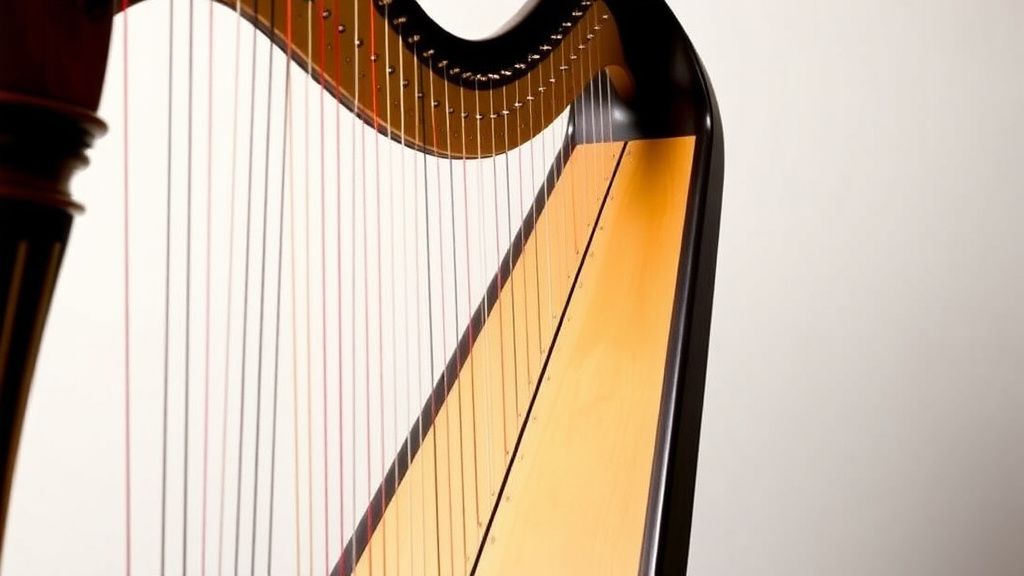
Harp Pedals Explained: Understanding Their Function
The pedal harp, also known as the concert harp, is a complex and elegant instrument that relies on a sophisticated pedal mechanism to change the pitch of its strings. Unlike lever harps, which use hand-operated levers to alter individual strings, pedal harps allow the player to adjust all strings of the same note simultaneously using foot pedals. Understanding how harp pedals work is essential for both beginners and advanced players, especially when selecting or maintaining an instrument.
How Harp Pedals Work
Pedal harps typically have seven pedals, each corresponding to a musical note (A, B, C, D, E, F, and G). These pedals are connected via a system of rods and levers inside the harp’s column, which adjust the tension of the strings. Each pedal has three positions:
- Top Position (Flat): The string is in its natural, lowest tension, producing a flat pitch.
- Middle Position (Natural): The pedal is slightly depressed, raising the pitch to its natural note.
- Bottom Position (Sharp): The pedal is fully depressed, increasing the tension further to produce a sharp pitch.
This mechanism allows harpists to play in any key without manually retuning the instrument, making it indispensable for classical and orchestral music.
Types of Pedal Mechanisms
Not all pedal harps use the same mechanism. The two primary types are:
1. Single-Action Pedal Harps
- Found on older or student models.
- Pedals only have two positions (flat and natural).
- Cannot produce sharp notes, limiting chromatic flexibility.
- Rare in modern professional settings but may be used for beginners due to lower cost.
2. Double-Action Pedal Harps
- The standard for professional harpists.
- Pedals have three positions (flat, natural, sharp).
- Allows full chromatic range and key changes mid-performance.
- More complex mechanism requires precise maintenance.
Key Components of the Pedal System
A harp’s pedal system consists of several critical parts:
- Pedals: Foot-operated levers at the base of the harp.
- Linkage Rods: Metal rods running inside the column, connecting pedals to discs.
- Discs (or Cam Plates): Rotating mechanisms that press against strings when pedals are engaged.
- String Shoes: Small metal pieces that grip strings, ensuring clean pitch changes.
Proper alignment of these components is crucial for smooth operation. Misaligned discs or worn string shoes can cause buzzing or inconsistent tuning.
Common Pedal-Related Issues and Maintenance
Pedal mechanisms require regular upkeep to function optimally. Common issues include:
- Stiff or Stuck Pedals: Often caused by dust buildup or lack of lubrication. Regular cleaning and light oiling can help.
- Buzzing Strings: May indicate misaligned discs or worn string shoes. A professional technician should inspect and adjust.
- Loose Linkage Rods: Can cause delayed or uneven pitch changes. Tightening or replacing rods may be necessary.
Annual servicing by a qualified harp technician is recommended to keep the pedal system in top condition.
What to Look for in a Pedal Harp
When choosing a pedal harp, consider the following:
- Pedal Responsiveness: Test each pedal for smooth, consistent movement without excessive resistance.
- Mechanical Noise: Some pedal noise is normal, but loud clicks or grinding may indicate alignment issues.
- String Stability: Ensure pitch changes are immediate and stable, with no slippage or buzzing.
- Build Quality: High-quality materials (e.g., brass linkages, reinforced discs) improve durability.
- Weight and Balance: Pedal pressure should feel even, and the harp should remain stable when pedals are engaged.
For beginners, a well-maintained used pedal harp with a double-action mechanism is often a better investment than a new single-action model, as it allows for long-term growth.
Conclusion
Harp pedals are a marvel of engineering, enabling the instrument’s full expressive potential. Whether you’re a student selecting your first pedal harp or a professional maintaining your concert instrument, understanding how pedals function—and what to look for—ensures a smooth playing experience. Regular maintenance and careful evaluation when purchasing will keep your harp performing beautifully for years to come.
Our picks worth a closer look
- Basic Harp for BeginnersCheck on Amazon → — see current price and specs.
- First Harp Book – Bety Paret | Harp Sheet Music for Beginners | Folk and ClassicCheck on Amazon → — see current price and specs.
- 50 Irish Melodies for All Harps | Harp Sheet Music Songbook for Lever and Pedal Check on Amazon → — see current price and specs.
- 76 Disney Songs for the Harp Arranged by Sylvia Woods | Harp Sheet Music SongbooCheck on Amazon → — see current price and specs.
- 22 Romantic Songs for the Harp | Intermediate Harp Sheet Music for Lever and PedCheck on Amazon → — see current price and specs.