
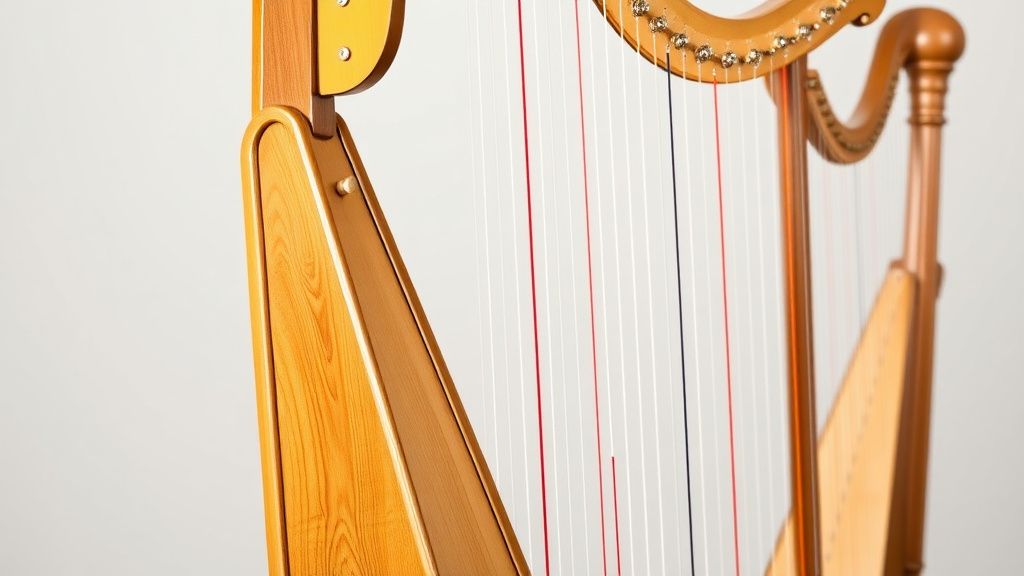
Introduction to Harp Levers and Pedals
When choosing a harp, one of the most critical decisions you’ll face is whether to opt for a lever harp or a pedal harp. Both types have distinct features, benefits, and limitations, making them suitable for different playing styles, skill levels, and musical genres. Understanding the differences between harp levers and pedals is essential for making an informed decision that aligns with your musical goals.
Lever Harps: Features and Benefits
Lever harps, also known as Celtic or folk harps, are characterized by their use of manual levers to change the pitch of the strings. These levers are typically located at the top of the harp, near the tuning pins. When engaged, a lever shortens the string slightly, raising its pitch by a semitone.
Types of Lever Harps
Lever harps come in a variety of sizes, ranging from small lap harps with fewer than 20 strings to larger models with up to 40 strings. Smaller harps are portable and ideal for beginners or folk musicians, while larger lever harps offer a broader tonal range for more advanced players.
Advantages of Lever Harps
- Portability: Lever harps are generally lighter and more compact than pedal harps, making them easier to transport.
- Affordability: They are often less expensive than pedal harps, making them a popular choice for beginners.
- Ease of Use: The levers are straightforward to operate, making lever harps accessible for players of all ages.
- Versatility: Lever harps are well-suited for folk, Celtic, and contemporary music, and they can also be used for therapeutic or recreational purposes.
Limitations of Lever Harps
- Limited Key Changes: Changing keys manually with levers can be cumbersome during fast-paced pieces.
- Tuning Stability: Lever harps may require more frequent tuning, especially if the levers are used extensively.
- Range: Smaller lever harps have a narrower range compared to pedal harps, which may limit their use in classical or orchestral settings.
Pedal Harps: Features and Benefits
Pedal harps, also known as concert or orchestral harps, are the standard choice for professional harpists and classical musicians. These harps use a complex pedal system to change the pitch of the strings, allowing for seamless key changes and chromatic playing.
Types of Pedal Harps
Pedal harps typically have 40 to 47 strings and are larger and heavier than lever harps. They are designed for advanced players and are commonly used in orchestras, chamber ensembles, and solo performances.
Advantages of Pedal Harps
- Chromatic Flexibility: The pedal system allows for quick and precise key changes, making pedal harps ideal for complex classical music.
- Range: Pedal harps offer a broader tonal range, enabling players to perform a wider variety of repertoire.
- Tuning Stability: Pedal harps are designed for professional use and typically maintain their tuning better than lever harps.
- Dynamic Expression: The pedal system allows for greater control over dynamics and articulation, enhancing musical expression.
Limitations of Pedal Harps
- Cost: Pedal harps are significantly more expensive than lever harps, often costing tens of thousands of dollars.
- Portability: Their size and weight make them difficult to transport, requiring specialized cases or vehicles.
- Complexity: The pedal system can be challenging to master, making pedal harps less suitable for beginners or casual players.
Key Differences Between Lever and Pedal Harps
Mechanism
The primary difference lies in how pitch changes are achieved. Lever harps use manual levers, while pedal harps use a foot-operated pedal system. This fundamental distinction affects the harp’s playability, versatility, and suitability for different musical styles.
Musical Applications
Lever harps are favored in folk, Celtic, and contemporary music, as well as for therapeutic or educational purposes. Pedal harps, on the other hand, are the instrument of choice for classical, orchestral, and professional performances.
Skill Level
Lever harps are more beginner-friendly due to their simpler mechanism and lower cost. Pedal harps require advanced technical skills and are typically reserved for experienced players.
Price and Maintenance
Lever harps are more affordable and require less maintenance than pedal harps. However, pedal harps offer greater precision and durability, justifying their higher price tag for serious musicians.
What to Look for When Choosing Between Levers and Pedals
When deciding between a lever harp and a pedal harp, consider the following factors:
- Musical Goals: Determine the genre and complexity of music you plan to play. For classical or professional use, a pedal harp is essential. For folk or recreational playing, a lever harp may suffice.
- Budget: Lever harps are more affordable and accessible for beginners, while pedal harps are a significant investment suited for advanced players.
- Portability: If you need to transport your harp frequently, a lever harp’s lightweight design may be more practical.
- Skill Level: Beginners should start with a lever harp to build foundational skills before transitioning to a pedal harp.
- Maintenance: Consider the time and cost associated with tuning and upkeep. Pedal harps, while more stable, require professional maintenance.
Conclusion
Both lever harps and pedal harps have unique strengths that cater to different musical needs and skill levels. Lever harps are affordable, portable, and versatile, making them ideal for beginners and folk musicians. Pedal harps, with their chromatic flexibility and professional-grade features, are the preferred choice for classical and advanced players. By understanding the differences and evaluating your musical goals, you can choose the harp that best suits your needs and enhances your playing experience.
Our picks worth a closer look
- Roosebeck 19-String Pixie Harp w/Shelby LeversCheck on Amazon → — see current price and specs.
- Roosebeck Heather Harp w/Full Chelby Levers - Vine EngravedCheck on Amazon → — see current price and specs.
- Roosebeck 22-String Heather Harp w/Full Chelby Levers - KnotworkCheck on Amazon → — see current price and specs.
- 27” Diagonal 15 Strings Semi LEVERS Celtic Irish ROSEWOOD HARP + Bag + Tuning KeCheck on Amazon → — see current price and specs.
- Roosebeck 29-String Minstrel Harp w/Chelby Levers - Vine DesignCheck on Amazon → — see current price and specs.