
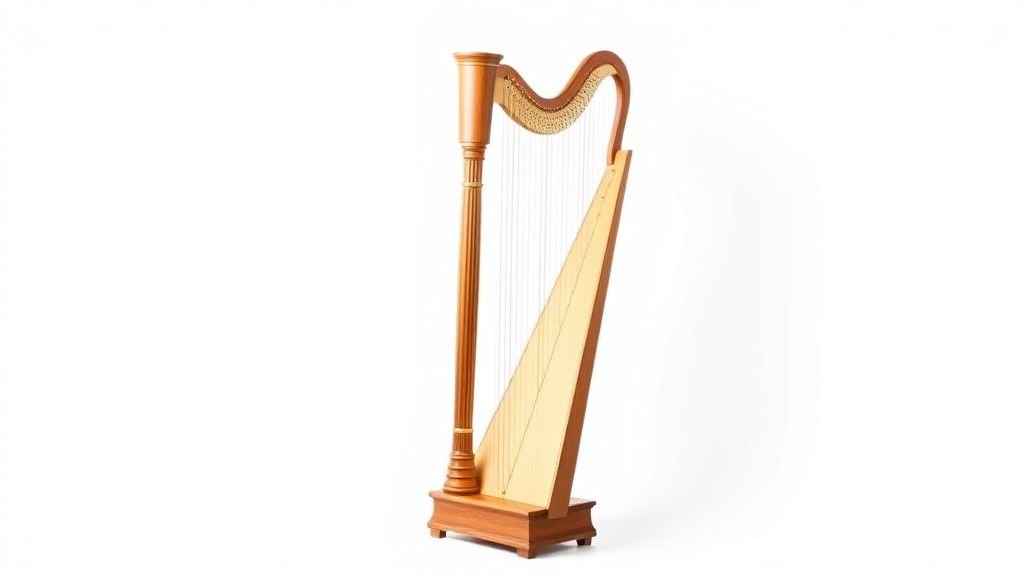
Why Harp Humidifiers Matter
Harpists know that wood is sensitive to humidity changes—too dry, and the soundboard can crack; too damp, and glue joints may weaken. A humidifier helps maintain stable conditions, protecting your instrument’s tone and longevity. But not all humidifiers work equally well in every climate. Whether you live in an arid desert, a humid coastal area, or a region with seasonal swings, choosing the right humidifier is key.
Types of Harp Humidifiers
1. Soundboard Humidifiers
These attach directly inside the harp, near the soundboard, and release moisture slowly. Ideal for:
- Dry climates (e.g., deserts, winter interiors with heating).
- Lever harps, as their smaller soundboards need targeted hydration.
Features to note: - Sponge-based designs (require manual refilling).
- Some use hydrogel or evaporative technology for longer-lasting moisture.
2. Room Humidifiers
Larger units that humidify the entire space. Best for:
- Extreme dryness (consistent low humidity year-round).
- Multiple harps in one room.
Features to note: - Ultrasonic vs. evaporative models (ultrasonic is quieter but may leave mineral dust; evaporative is filter-dependent).
- Built-in hygrometers to monitor humidity levels (ideal range: 40–60%).
3. Case or Gig Bag Humidifiers
Compact humidifiers designed for travel or storage. Great for:
- Touring musicians in varying climates.
- Seasonal humidity drops (e.g., summer to winter transitions).
Features to note: - Reusable silica gel or clay-based cartridges.
- Some fit into harp cases’ accessory pockets.
Matching Humidifiers to Your Climate
Arid Climates (Year-Round Dryness)
- Prioritize soundboard humidifiers for direct hydration.
- Pair with a room humidifier if the air is extremely dry (e.g., <30% humidity).
- Check sponges or cartridges weekly—they’ll dry out faster.
Humid Climates (Coastal or Tropical)
- Focus on moisture control rather than adding humidity. Use:
- Silica gel packs in the case to absorb excess moisture.
- A hygrometer to ensure levels stay below 60%.
- Avoid over-humidifying, which can cause swelling.
Seasonal Climates (Winter Dryness, Summer Dampness)
- Winter: Use a soundboard humidifier or room unit when heating systems dry the air.
- Summer: Switch to moisture-absorbing products if humidity spikes.
- Tip: Store harps away from vents, windows, and exterior walls.
What to Look for in a Harp Humidifier
-
Material Safety
- Avoid units with plastic that might off-gas near wood.
- Look for food-grade silica or natural sponges.
-
Ease of Maintenance
- Sponge-based humidifiers need frequent refilling; hydrogel models last longer.
- Room humidifiers require filter changes or cleaning.
-
Compatibility
- Ensure soundboard humidifiers fit your harp’s size (e.g., avoid bulky designs for small lever harps).
-
Monitoring
- A built-in hygrometer (or a standalone one) helps track humidity accurately.
Final Tips
- Test before long-term use: Place the humidifier near (not touching) the harp for a day to gauge moisture output.
- Combine methods in extreme climates (e.g., soundboard + room humidifier for deserts).
- Seasonal checks: Inspect your harp’s wood and joints monthly for stress signs.
By matching your humidifier to your environment—and staying proactive—you’ll keep your harp sounding its best for years.
Our picks worth a closer look
- Roosebeck Harp String Set, 19, F - CCheck on Amazon → — see current price and specs.
- Roosebeck Harp 26-String Set F - CCheck on Amazon → — see current price and specs.
- Harp Seal Painting Wallpaper Cooling Neck Gaiter Summer UV Dust Mask Breathable Check on Amazon → — see current price and specs.
- Sorandy Acoustic Guitar Humidifier, Sponge Moisturizer, Water Injection HumidifiCheck on Amazon → — see current price and specs.
- Hamwesh Small Harp, Handmade Basswood 25cm Miniature Musical Instruments Lap HarCheck on Amazon → — see current price and specs.