
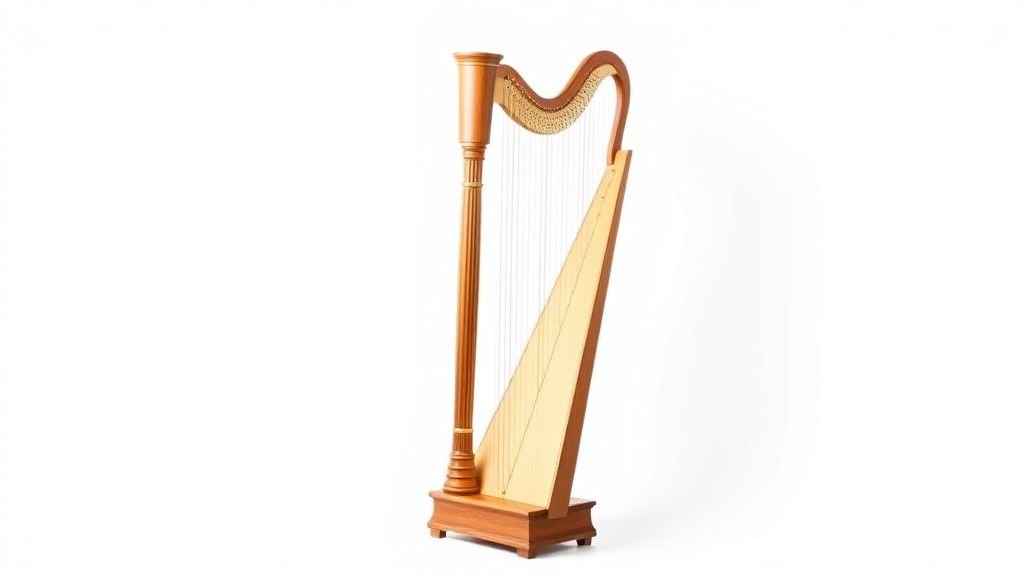
Harp Glissandos: Techniques and Variations
The harp glissando is one of the most iconic and expressive techniques in the harpist’s repertoire. This sweeping, cascading sound evokes elegance, drama, and emotion, making it a favorite in classical, jazz, and contemporary music. Mastering the glissando requires not only technical skill but also an understanding of the harp’s mechanics and the right accessories to enhance the effect. In this article, we’ll explore the techniques behind harp glissandos, variations to experiment with, and the tools that can help you achieve the perfect sound.
Understanding the Harp Glissando
A glissando, derived from the French word glisser meaning “to glide,” involves playing a rapid succession of notes, creating a smooth, flowing sound. On the harp, this is typically achieved by running your fingers across the strings in a single, fluid motion. The technique can be performed with one hand or both, depending on the desired effect and the musical context.
The harp’s design makes it uniquely suited for glissandos. The diatonic tuning of the strings allows for effortless transitions between notes, while the pedal mechanism on pedal harps enables chromatic glissandos by altering the pitch of the strings. Lever harps, on the other hand, rely on pre-set tunings or manual lever changes to achieve similar effects.
Techniques for Mastering the Glissando
-
Hand Position and Finger Control:
The key to a smooth glissando lies in your hand position and finger control. Keep your hand relaxed and slightly curved, using the pads of your fingers to glide across the strings. Avoid pressing too hard, as this can create a harsh sound. Experiment with different finger combinations—using all four fingers, just the thumb and fingers, or alternating hands for a fuller sound. -
Pedal or Lever Adjustments:
On pedal harps, glissandos can be enhanced by using the pedals to create chromatic scales or specific harmonies. For example, setting the pedals to play a major or minor scale allows for harmonically rich glissandos. Lever harpists can achieve similar effects by pre-tuning their harp or using partial lever changes during play. -
Dynamic Variation:
Glissandos can range from soft and delicate to bold and dramatic. Control the dynamics by varying the speed and pressure of your hand movement. A slower, lighter touch creates a gentle, ethereal effect, while a faster, firmer motion produces a more powerful sound. -
Direction and Range:
Glissandos can move upward, downward, or in both directions. Experiment with different ranges—across the entire harp or within a specific octave—to create varied textures. Combining upward and downward glissandos can add complexity and interest to your playing.
Variations to Explore
-
Harmonic Glissandos:
Incorporate harmonics into your glissandos by lightly touching the strings at their nodal points while gliding. This creates a shimmering, bell-like effect that adds a magical quality to your playing. -
Damped Glissandos:
For a percussive effect, try dampening the strings with your palm or fingers immediately after the glissando. This technique is particularly effective in rhythmic or contemporary pieces. -
Arpeggiated Glissandos:
Combine glissandos with arpeggios by playing individual notes within the glissando pattern. This adds a melodic element to the sweeping motion, creating a more intricate sound. -
Microtonal Glissandos:
Advanced players can experiment with microtonal glissandos by partially engaging the pedals or levers to create pitches between the standard notes. This technique is often used in avant-garde or experimental music.
Tools and Accessories for Enhancing Glissandos
-
String Cleaners and Conditioners:
Clean, well-maintained strings are essential for smooth glissandos. Use a string cleaner or conditioner to remove dirt and oils that can dull the sound. Products like soft cloths or specialized string cleaning solutions are widely available and easy to use. -
Finger Cots or Gloves:
Finger cots or gloves can protect your fingertips and improve your grip on the strings, especially during extended glissando passages. Look for lightweight, breathable options that allow for maximum sensitivity. -
Pedal Extenders:
For pedal harpists, pedal extenders can make it easier to adjust the pedals quickly and accurately during glissandos. These accessories are particularly useful for players with smaller feet or those performing complex pedal changes. -
Electronic Tuners and Metronomes:
Accurate tuning is crucial for glissandos, especially on lever harps. An electronic tuner ensures your strings are perfectly pitched, while a metronome helps you maintain consistent timing during rapid passages.
What to Look for When Choosing Harp Accessories
When selecting accessories to enhance your glissandos, consider the following:
- Compatibility: Ensure the accessory is designed for your specific type of harp (pedal or lever) and string material (nylon, gut, or wire).
- Quality: Opt for durable, high-quality products that will stand up to regular use.
- Ease of Use: Choose accessories that are user-friendly and integrate seamlessly into your playing technique.
- Portability: If you perform frequently, look for lightweight, compact accessories that are easy to transport.
By mastering the techniques, experimenting with variations, and investing in the right tools, you can elevate your harp glissandos to new heights. Whether you’re performing a classical piece, improvising in a jazz ensemble, or exploring contemporary compositions, the glissando offers endless possibilities for creativity and expression.
Our picks worth a closer look
- Basic Harp for BeginnersCheck on Amazon → — see current price and specs.
- HOW TO PLAY THE LYRE HARP: A Comprehensive Guide To Learning how To Play The LyrCheck on Amazon → — see current price and specs.
- How To Play Lever Harp: A Step-by-Step Beginner Guide to Learning the Lever HarpCheck on Amazon → — see current price and specs.
- PLAYING LYRE HARP FOR BEGINNERS: Unlock The Art Of Creating Enchanting Music WitCheck on Amazon → — see current price and specs.
- First Harp Book – Bety Paret | Harp Sheet Music for Beginners | Folk and ClassicCheck on Amazon → — see current price and specs.