Choosing the Right Harp for Your Musical Genre
The harp is a versatile instrument with a rich history spanning classical, folk, jazz, and even contemporary genres. However, not all harps are created equal—each type excels in specific musical styles due to its size, string count, construction, and tonal characteristics. Whether you’re a beginner or a seasoned player, selecting the right harp for your preferred genre ensures better playability and expression.
Here’s a guide to help you match your musical aspirations with the ideal harp.
Pedal Harps for Classical and Orchestral Music
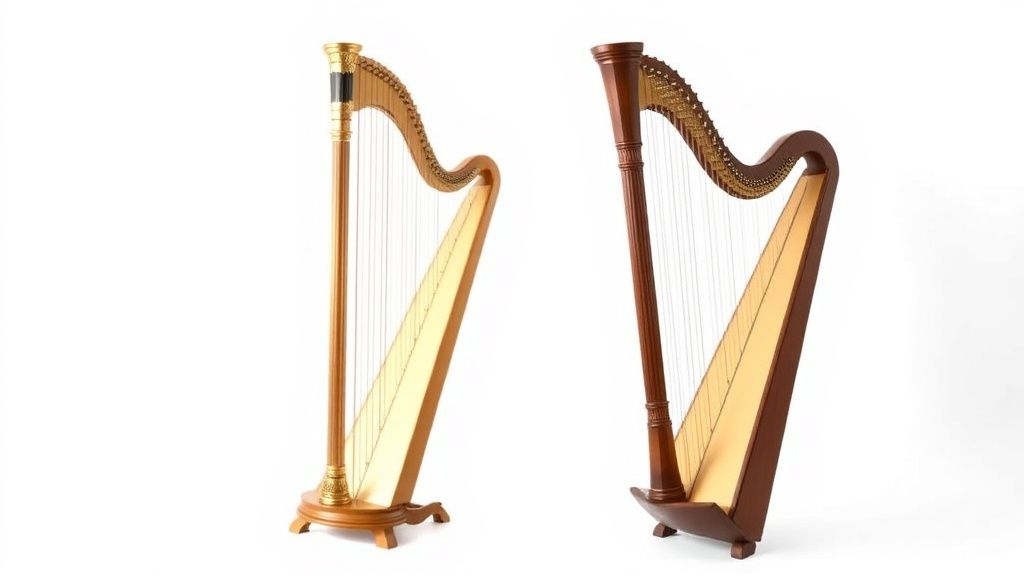
Pedal harps, also known as concert harps, are the gold standard for classical, orchestral, and advanced solo repertoire. They feature 47 strings and a complex pedal mechanism that allows players to change keys seamlessly by adjusting each string’s pitch.
Key Features:
- 47 strings (range: C1 to G7) for full orchestral range.
- Double-action pedals enabling sharps, flats, and naturals.
- Large size (around 6 feet tall, 80+ lbs), requiring stability and space.
- Rich, resonant tone with spruce soundboards for projection.
What to Look For:
- Smooth pedal action—test for responsiveness and noise.
- String tension—some prefer lighter tension for faster passages.
- Soundboard quality—solid spruce is standard for warmth and volume.
Pedal harps are an investment and suit advanced players, but lever harps with extended ranges can serve as stepping stones.
Lever Harps for Folk, Celtic, and Singer-Songwriter Styles
Lever harps (also called Celtic or folk harps) are smaller, portable, and often used in traditional music. They range from 22 to 38 strings and use levers (instead of pedals) to change notes. Their warm, intimate tone is perfect for folk, Celtic, and accompaniment.
Key Features:
- 22–38 strings, with 34–36 being popular for versatility.
- Semitone levers for key changes (less fluid than pedals).
- Lightweight designs (15–30 lbs), often with smaller soundboxes.
- Nylon or gut strings for a softer, mellower sound.
What to Look For:
- Lever quality—check for precision (e.g., Camac or Truitt levers).
- String spacing—wider spacing aids fingerstyle playing.
- Portability—consider weight and height if gigging.
Lever harps like the Salvi Aurora or Dusty Strings Ravenna balance playability and affordability for folk musicians.
Wire-Strung Harps for Early Music and Traditional Irish
Wire-strung harps, historically used in early Irish and Scottish music, produce a bright, metallic timbre. They’re niche but essential for authentic historical performances.
Key Features:
- Brass or bronze strings for a sharp, ringing tone.
- Fewer strings (typically 24–30) and no levers.
- Heavier construction to withstand high string tension.
What to Look For:
- String material—bronze is warmer; brass is brighter.
- Robust neck design—wire strings exert more pressure.
These harps are rare but prized by traditionalists. Models like the Sylvia Woods Wire Harp cater to this style.
Cross-Strung and Chromatic Harps for Jazz and Contemporary Music
Jazz, pop, and experimental genres often require chromatic flexibility. Standard diatonic harps limit this, but cross-strung and chromatic harps offer workarounds.
Cross-Strung Harps:
- Two intersecting rows of strings (e.g., C and C# strings).
- No levers or pedals—all notes are always available.
- Steeper learning curve due to alternating string planes.
Chromatic Harps:
- Double rows (like a pedal harp without pedals).
- Full chromatic range—ideal for complex harmonies.
What to Look For:
- String layout clarity—ensure comfortable reach.
- Tonal balance—some chromatic harps sacrifice warmth for range.
The L&H Ogden chromatic harp is a well-regarded option for jazz players.
Electric Harps for Modern and Amplified Performances
Electric harps (acoustic-electric or solid-body) cater to amplified settings, from rock to electronic music. They often include pickups and effects compatibility.
Key Features:
- Pickups (piezo or magnetic) for clean amplification.
- Lightweight bodies (some without soundboxes).
- Modular designs for effects like reverb or distortion.
What to Look For:
- Feedback resistance—important for high-volume stages.
- EQ controls—some harps include onboard preamps.
The Camac Electroharp is a popular choice for live performers.
What to Look for in Any Harp
Regardless of genre, prioritize:
- Playability: Test action, string tension, and ergonomics.
- Tone: Listen for warmth, brightness, or sustain—matched to your genre.
- Durability: Solid wood construction lasts longer than laminate.
- Budget: Lever harps start around $1,500; pedal harps exceed $15,000.
Final Thoughts
Your harp should align with both your musical goals and practical needs. Try before you buy, consult teachers or luthiers, and consider renting before committing. Whether you’re chasing the grandeur of a pedal harp or the portability of a lever harp, the right choice will elevate your musical expression.
Our picks worth a closer look
- Hape Happy Harp Kid’s Musical Instrument | Award Winning Wooden Lap Harp Toy forCheck on Amazon → — see current price and specs.
- Cheerock 7 Lyre Harp Strings 7pcs String Pin Nails with Tuning Wrench ReplacemenCheck on Amazon → — see current price and specs.
- VixxNoxx Lyre Harp, 16-String Mahogany Lyra Harp Kit, Stringed Musical InstrumenCheck on Amazon → — see current price and specs.
- VixxNoxx Lyre Harp, 19-String Mahogany Lyra Harp Kit, Stringed Musical InstrumenCheck on Amazon → — see current price and specs.
- GOOHOCHY 7pcs Harp Strings Set Replacement Lyre Strings for Musical Instruments Check on Amazon → — see current price and specs.