
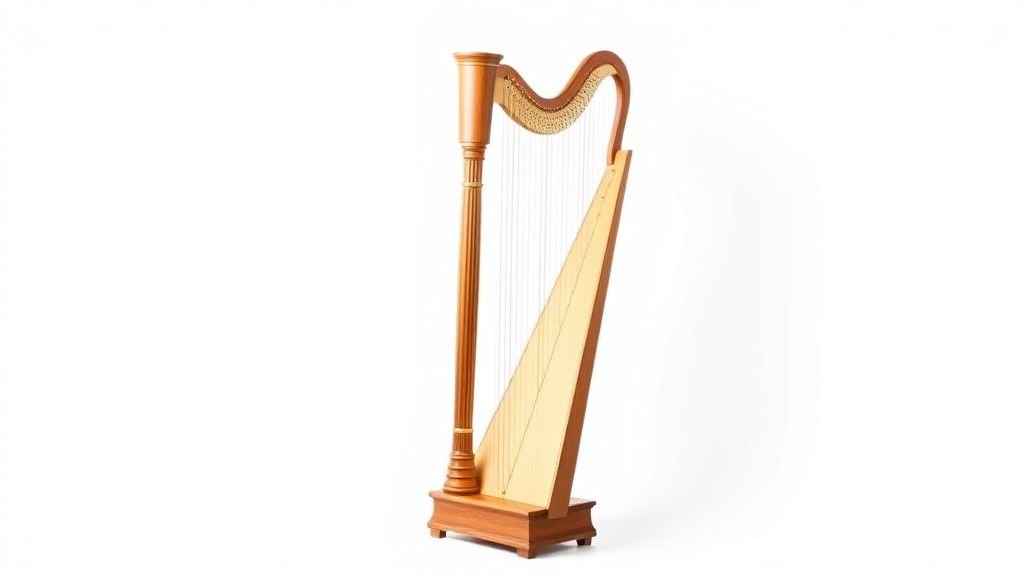
Introduction to Lever Harps for Beginners
Lever harps, also known as Celtic harps, are a popular choice for beginners due to their affordability, portability, and ease of use. Unlike pedal harps, lever harps use mechanisms to change the pitch of individual strings, making them ideal for learning the fundamentals of harp playing. For those on a budget, finding a quality lever harp under $1500 is entirely possible with careful consideration. This guide explores the best options available, focusing on features, playability, and value for money.
Key Features to Consider
When choosing a beginner lever harp, several factors should guide your decision:
- Number of Strings: Most beginner lever harps have between 22 and 34 strings. Fewer strings make the instrument lighter and easier to handle, while more strings offer a wider range for playing diverse music.
- String Material: Nylon strings are common for beginners due to their softer feel and affordability. Some harps also use gut or synthetic gut strings, which produce a warmer tone but may require more maintenance.
- Lever Quality: Levers should be smooth, durable, and easy to operate. Look for levers made from brass or stainless steel for longevity.
- Weight and Portability: Beginner harps are often lightweight, making them easy to transport for lessons or performances.
- Build Quality: Solid wood construction ensures durability and better sound quality. Laminated wood options are more affordable but may lack resonance.
- Tuning Stability: A well-built harp will hold its tuning longer, reducing the need for frequent adjustments.
Top Beginner Lever Harps Under $1500
Compact 22-String Harps
Compact harps with 22 strings are ideal for beginners who prioritize portability and simplicity. These harps are lightweight and easy to handle, making them perfect for younger players or those with limited space.
- Pros: Affordable, lightweight, easy to learn on.
- Cons: Limited range, not suitable for advanced repertoire.
Mid-Range 26-String Harps
For those seeking a balance between portability and versatility, 26-string harps are an excellent choice. They offer a broader range of notes while remaining manageable in size and weight.
- Pros: Wider range, still portable, versatile for various music styles.
- Cons: Slightly heavier and more expensive than 22-string models.
Larger 34-String Harps
While less common in this price range, some 34-string lever harps are available under $1500. These harps provide a full range of notes, making them suitable for more advanced beginners or those planning to grow into their instrument.
- Pros: Extensive range, suitable for advanced repertoire.
- Cons: Heavier, less portable, may require more maintenance.
Popular Materials and Their Impact
Solid Wood Harps
Solid wood harps are prized for their rich, resonant sound and durability. Common woods include maple, mahogany, and cherry. While these harps tend to be more expensive, they offer superior tonal quality and longevity.
Laminated Wood Harps
Laminated wood harps are more affordable and resistant to changes in humidity and temperature. While they may not produce the same depth of sound as solid wood harps, they are an excellent choice for beginners on a budget.
Carbon Fiber Harps
Carbon fiber harps are lightweight, durable, and resistant to environmental changes. They are ideal for players who need a portable instrument that can withstand frequent travel.
Accessories to Enhance Your Experience
Investing in the right accessories can significantly improve your harp-playing experience:
- Stands: A sturdy harp stand ensures your instrument is secure while playing or practicing.
- Tuners: Electronic tuners make it easy to keep your harp in tune, especially for beginners.
- Humidifiers: Essential for maintaining the wood in solid wood harps, especially in dry climates.
- Benches: An adjustable harp bench provides proper posture and comfort during long practice sessions.
- Cases: A padded case protects your harp during transport and storage.
What to Look for When Buying a Beginner Lever Harp
- Your Goals: Consider your musical aspirations. If you plan to play complex pieces, opt for a harp with more strings.
- Playability: Test the harp if possible. Ensure the levers are easy to operate and the strings are comfortable to pluck.
- Sound Quality: Listen to the harp’s tone. A warm, resonant sound is preferable, even for beginners.
- Durability: Check the build quality. Solid wood harps last longer, but laminated wood options are more budget-friendly.
- Portability: If you plan to travel with your harp, choose a lightweight model with a manageable size.
- Accessories: Factor in the cost of essential accessories like a stand, tuner, and case when budgeting.
Conclusion
Finding the best beginner lever harp under $1500 requires careful consideration of your needs, goals, and budget. Compact 22-string harps are perfect for absolute beginners, while 26-string models offer greater versatility. Larger 34-string harps are ideal for those ready to tackle more advanced repertoire. Pay attention to materials, build quality, and accessories to ensure your harp provides a rewarding learning experience. With the right instrument, you’ll be well on your way to mastering the beautiful art of harp playing.
Our picks worth a closer look
- 50 Irish Melodies for All Harps | Harp Sheet Music Songbook for Lever and Pedal Check on Amazon → — see current price and specs.
- Stairway to Heaven | Harp Sheet Music Arrangement for Lever and Pedal Harp | SylCheck on Amazon → — see current price and specs.
- First 50 Songs You Should Play on Harp Easy Sheet Music for Pedal and Lever HarpCheck on Amazon → — see current price and specs.
- Lyre Harp, 16 Strings Mahogany Acoustic Harp with Extra Strings, Picks, Tuning LCheck on Amazon → — see current price and specs.
- GREALY Lyre Harp, 21 Strings Mahogany Acoustic Harp with Extra Strings, Picks, TCheck on Amazon → — see current price and specs.