
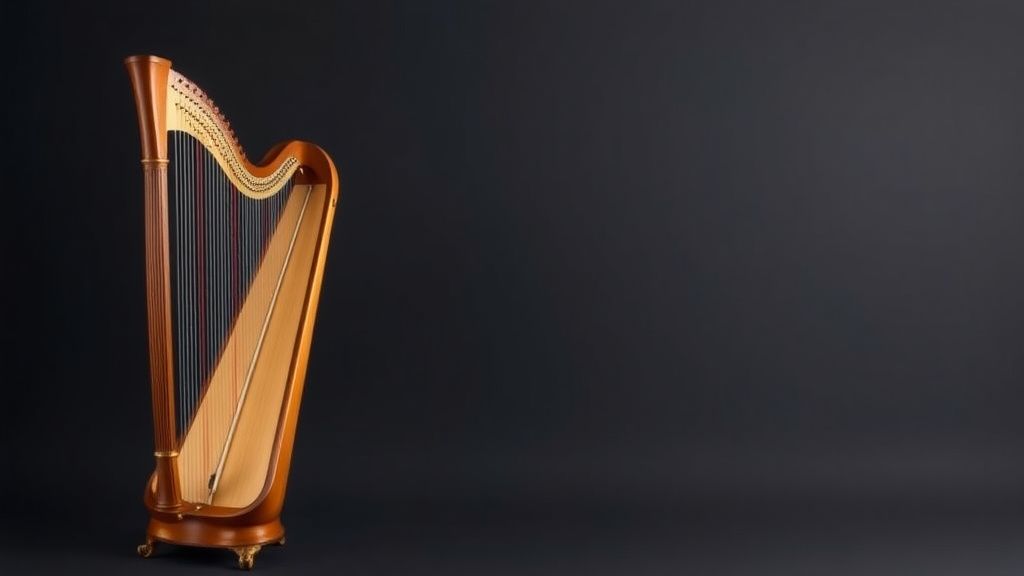
Advanced Harp Stands: Features for Professional Players
Professional harpists demand stability, adjustability, and durability from their stands. Unlike beginner models, advanced harp stands must accommodate frequent travel, varying performance conditions, and heavier pedal or concert grand harps. This guide explores key features, materials, and design considerations to help you choose the best stand for professional use.
Stability and Weight Capacity
A professional harp stand must securely hold the instrument without wobbling, even during vigorous playing. Key stability features include:
- Wide, Reinforced Bases: Look for tripod or quad-legged designs with rubberized feet to prevent slipping.
- High Weight Ratings: Ensure the stand supports your harp’s weight (pedal harps can exceed 80 lbs).
- Low Center of Gravity: Some stands have weighted bases or crossbars for added steadiness.
For orchestral or stage use, stands with quick-lock mechanisms allow fast setup without compromising security.
Adjustability for Ergonomics
Harpists often play for hours, so a stand must adapt to individual posture needs. Important adjustments include:
- Height Customization: Look for telescoping or multi-notch systems to match seated or standing positions.
- Tilt Options: Some stands offer forward/backward tilt to optimize string access and wrist angles.
- Modular Add-Ons: Detachable trays for sheet music or accessories (e.g., tuners, picks) reduce clutter.
Portability and Travel Features
Touring harpists need stands that balance sturdiness with portability:
- Folding Designs: Collapsible legs or quick-release hinges simplify transport.
- Lightweight Materials: Aircraft-grade aluminum is durable yet easy to carry.
- Travel Cases: Some stands include padded bags or hard-shell cases for protection.
For air travel, ensure the stand meets airline size restrictions if checking it as luggage.
Materials and Durability
Professional stands often use:
- Steel: Heavy-duty but stable; ideal for stationary use.
- Aluminum: Corrosion-resistant and lighter for frequent transport.
- Reinforced Polymers: Used in hybrid designs to reduce weight without sacrificing strength.
Check for powder-coated or anodized finishes to resist scratches and humidity damage.
Specialized Stand Types
Orchestra Stands
Designed for quick transitions between pieces, these often include:
- Silent setup mechanisms (e.g., felt-lined joints).
- Compact footprints to fit tight pit spaces.
Recording Studio Stands
Optimized for mic placement and minimal vibration:
- Isolation feet to reduce floor noise.
- Low-profile designs to avoid casting shadows on microphones.
Therapy/Medical Harp Stands
Used in clinical settings, these prioritize:
- One-handed height adjustments for wheelchair users.
- Antimicrobial coatings for hygiene.
What to Look for When Buying
- Compatibility: Verify the stand fits your harp’s size and string tension.
- Setup Speed: Test mechanisms (e.g., lever locks vs. screw knobs) for efficiency.
- Surface Grip: Non-slip padding should protect the harp’s finish.
- Warranty: Professional-grade stands often include long-term coverage.
Investing in a high-quality stand improves performance longevity and reduces physical strain. Prioritize features that match your playing environment—whether touring, recording, or performing in varied venues.
Our picks worth a closer look
- 50 Irish Melodies for All Harps | Harp Sheet Music Songbook for Lever and Pedal Check on Amazon → — see current price and specs.
- 76 Disney Songs for the Harp Arranged by Sylvia Woods | Harp Sheet Music SongbooCheck on Amazon → — see current price and specs.
- Groovy Songs of the ’60s for Harp Arranged by Sylvia Woods | 40 Easy and IntermeCheck on Amazon → — see current price and specs.
- Christmas Songs for Harp | Holiday Sheet Music for Lever Harp Players | IntermedCheck on Amazon → — see current price and specs.
- Roosebeck Harp String Set, 19, F - CCheck on Amazon → — see current price and specs.